The Milligram Ledger: Auditing Real CBD Value in UK Bottles, Capsules and Cans
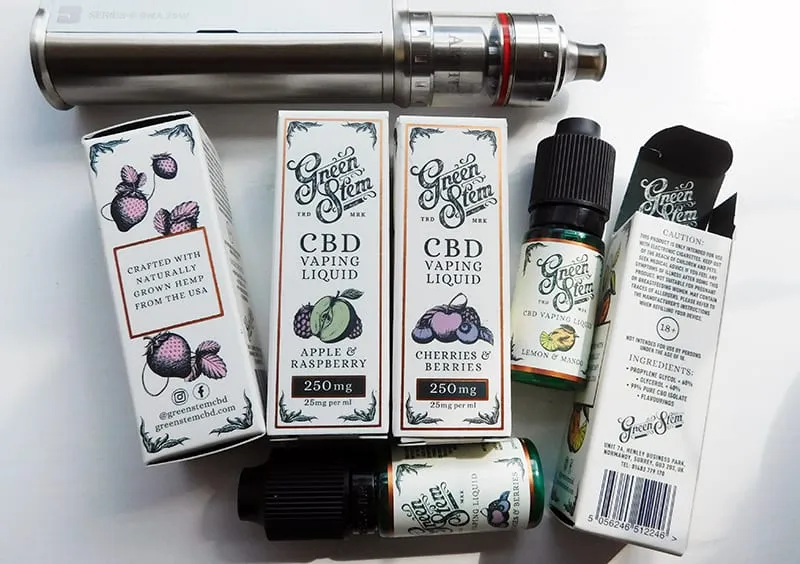
Photo: Ecig Click, CC BY-SA 2.0, via Wikimedia Commons
The number the shelf rarely shows
A larger bottle is not automatically better value, and a higher-strength label is not automatically cheaper to use. For UK CBD consumers in 2026, the more useful question is simpler: what does each milligram of cannabidiol cost once the bottle, the batch certificate, the serving size and the delivery charge have all been taken into account?
That question sits within the ordinary consumer-rights territory of clear pricing and fair dealing. It is not a judgment about whether CBD works for any particular purpose; it is an audit of value. The aim is to replace front-label impression with a small amount of arithmetic.
Begin with total milligrams, not bottle size
For oils, the total CBD content is usually expressed either as milligrams per bottle or as milligrams per millilitre. A 10 ml bottle labelled 1,000 mg contains roughly 1,000 mg of CBD across the whole bottle. A 30 ml bottle labelled 1,500 mg contains 1,500 mg across a larger volume. The bottle that looks more generous may not be the one that delivers more CBD per pound.
Divide the price by the total milligrams. That gives a cost per milligram. Then multiply by the serving size you actually use to see the cost per serving. Keep the two figures separate: cost per milligram is the comparison tool; cost per serving is the budgeting tool.
Worked example one: two oils on the same shelf
Suppose Oil A is 10 ml at 1,000 mg and costs £34.99. The calculation is £34.99 ÷ 1,000 = £0.035 per mg. A 10 mg serving would cost about 35p.
Oil B is 30 ml at 1,500 mg and costs £49.99. That is £49.99 ÷ 1,500 = £0.033 per mg. A 10 mg serving would cost about 33p. Oil B is slightly better value per milligram, but the difference is modest. If Oil B also carries a £3.95 delivery charge and Oil A is available locally, the gap may close or reverse.
Now suppose Oil C is 10 ml at 500 mg and costs £29.99. That is £0.06 per mg, or 60p for a 10 mg serving. The smaller bottle is not a scandal, but it is materially more expensive per milligram. The label alone would not reveal that.
Worked example two: capsules and gummies
Capsules are often easier to audit because the milligram content per capsule is stated. A tub of 60 capsules at 25 mg each contains 1,500 mg in total. At £45, the cost is £0.03 per mg, or 75p per capsule.
Gummies require a little more care. A packet of 30 gummies at 10 mg each contains 300 mg in total. At £24.99, the cost is about £0.083 per mg, or roughly 83p per gummy. On a pure milligram basis the capsules are better value, but they are not identical products. Gummies may contain sugar, flavourings and other ingredients; capsules may contain carriers and excipients. Value is not only the CBD fraction, but the CBD fraction is the sensible starting point.
Worked example three: drinks and shots
A 250 ml CBD drink containing 10 mg and costing £3.50 works out at £0.35 per mg. That is far higher than the oil and capsule examples. This does not make the drink poor value in every sense — it may be bought for taste, convenience or a social setting — but it should be understood as a premium format rather than an economical source of CBD.
Shots can be similar. A 60 ml shot with 20 mg at £4.50 is £0.225 per mg. The smaller the CBD content relative to price, the more the product is being bought for format and experience rather than milligram value.
The hidden multipliers
Batch potency
A label may state 1,000 mg, but a batch certificate might report 940 mg. If the product costs £34.99, the effective cost rises to about £0.037 per mg. This is not necessarily a red flag — some variation is normal — but the certificate is the more reliable figure. UK buyers should look for a batch-specific certificate of analysis rather than a generic label image.
Serving size
A product can look cheap per bottle but require a large serving to deliver the same milligram amount. Always compare like with like: cost per 10 mg, cost per 25 mg, or whatever serving the reader actually intends to use.
Subscription pricing
A 15% subscription discount can improve value, but only if the commitment suits the household. Check the minimum term, cancellation window and whether the discounted price includes delivery. A subscription that locks in a product the buyer would not otherwise finish is not good value.
Delivery and minimum spend
A £3.95 delivery charge on a £30 order adds more than 13% to the effective cost. If free delivery requires a £50 spend, the apparent saving may encourage buying more than needed. The audit should include the total paid, not the product price alone.
A simple audit sheet for 2026
For each product, record: total price paid including delivery; total CBD milligrams in the pack; batch-certified potency if available; cost per milligram; cost per intended serving; and any subscription or minimum-term condition. A calculator and a notebook are sufficient. The exercise takes a few minutes and often reveals that the middle-priced product is the better ledger entry.
What value does not mean
A low cost per milligram does not establish quality, safety or legality. UK consumers should still check that the product appears on the FSA novel food list where applicable, that the label is clear, and that the retailer provides batch documentation. Nor does a high cost per milligram prove a product is superior. The point is to separate the arithmetic from the atmosphere of the shelf.
Value in CBD is not a single number, but the milligram ledger is the honest place to begin. Once the cost per milligram is visible, the rest of the decision — format, ingredients, retailer and routine — can be made with clearer eyes.