Sugar, Saliva and the Evening Brush: An Oral-Care Audit for UK CBD Gummies and Oils
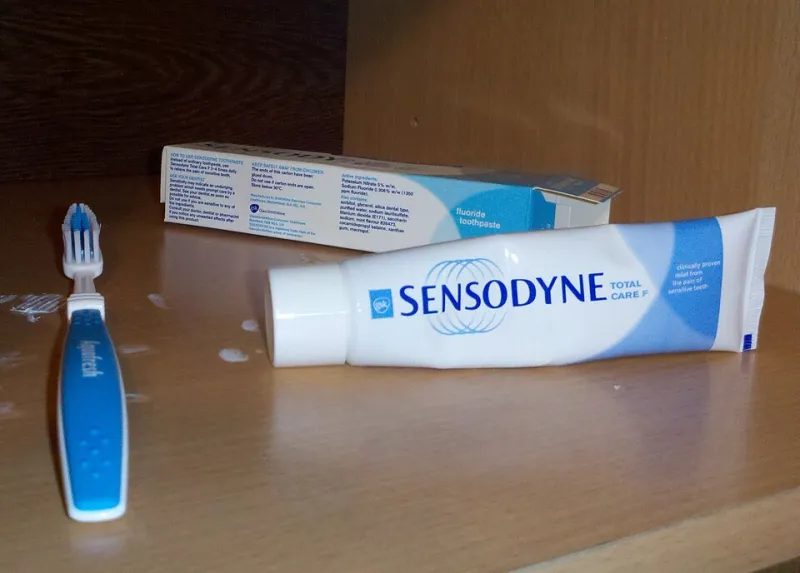
Photo: Milad Mosapoor, Attribution, via Wikimedia Commons
The dental chair is an unlikely place to think about cannabidiol, yet the mouth is where most CBD products begin their journey. A gummy is chewed, a drop is held under the tongue, a canned drink is sipped across an afternoon. Each of those habits has an oral-health dimension that no amount of careful label reading on the CBD side will address on its own.
The aim here is not to discourage anyone. It is to place CBD products sensibly alongside the dental basics that have far stronger evidence behind them: fluoride toothpaste, twice-daily brushing, attention to how often sugar enters the mouth, and a check-up schedule agreed with a dentist.
What the sweets actually contain
CBD gummies are confectionery with an active ingredient added. In practice, that means the dental questions are much the same as those for any other chewable sweet, with a few extra label complications.
The first is dosage framing. A packet may state the CBD content per sweet and per container, but the sugar figure is often given only per 100g — a figure that tells you very little unless you weigh your gummies. Look for sugar per sweet, or per stated serving, and multiply by the number you actually eat. UK guidance suggests free sugars should make up no more than about 5% of daily energy, roughly 30g a day for adults, and sweets are a straightforward way to spend that allowance quickly.
Texture matters as much as quantity. A soft, sticky sweet clings to the grooves of the molars and stays in contact with enamel for longer than a biscuit would. Frequency of exposure is often more damaging than total volume, which is why a single gummy eaten with a meal is a different proposition from three eaten across an evening.
Two label phrases deserve scepticism. "No added sugar" does not mean sugar-free, and "sugar-free" does not mean harmless. Many sugar-free gummies rely on polyols such as sorbitol or maltitol, which do not feed decay-causing bacteria in the same way as sucrose but can cause digestive discomfort in quantity. Xylitol, by contrast, has reasonable evidence behind it as a cavity-preventing sweetener. Acidic flavourings — citric acid, malic acid, ascorbic acid — appear in many fruity varieties and contribute to enamel erosion when consumed repeatedly.
Oils, drops and the sublingual habit
Oil-based CBD drops are usually sugar-free, so the decay question is largely absent. The practical issues are different. Many people hold the oil under the tongue for a minute or two before swallowing, which is fine, but some products are flavoured with sweeteners or syrups, and a few sprays contain ethanol, which can feel drying on the soft tissues.
Check the carrier oil too. MCT and coconut-derived carriers are common and irrelevant to teeth, but worth noting if you have a diagnosed allergy. As with any CBD product sold in the UK, look for a clear statement of CBD content per drop or per spray, a batch number, and a laboratory certificate — and remember that cannabidiol is not an authorised medicine, so no product should be making dental or therapeutic claims of any kind.
The dry-mouth question
A dry mouth is a genuine dental concern rather than a minor annoyance. Saliva buffers acids, delivers minerals back into enamel and physically clears food debris. When flow drops, decay risk rises.
Is CBD a cause? The honest answer is that the evidence is thin. Some small studies have reported subjective dryness with cannabidiol use, and smoked cannabis is well associated with dry mouth, but that does not automatically transfer to an oral oil or a gummy. In most people who notice dryness, the more likely contributors are ordinary medicines — antihistamines, some antidepressants, diuretics — alongside caffeine, alcohol, mouth breathing, and simply getting older.
If dryness is persistent rather than occasional, it is worth raising with a dentist or GP rather than attributing it to a supplement. In the meantime, the standard measures apply: water rather than fizzy drinks, sugar-free gum to stimulate flow, and continued use of fluoride toothpaste. A fluoride mouthwash at a different time of day from brushing is sometimes suggested; ask your dentist whether it suits your situation.
Timing around the toothbrush
UK guidance is unglamorous and consistent: brush last thing at night and on at least one other occasion, using a toothpaste with 1,350 to 1,500ppm fluoride for adults, and spit rather than rinse afterwards so the fluoride stays on the teeth.
Where CBD fits is a matter of sequencing. If you take a gummy as part of an evening routine, take it before you brush, not after — otherwise sugar sits on the enamel overnight. The same logic applies to sweetened CBD drinks. And for anything acidic, including many soft drinks, wait roughly half an hour before brushing; enamel softened by acid is more easily worn away by the brush. Rinsing with water, or eating a small piece of cheese, helps in the interval.
None of this is complicated, but it is easy to overlook when a product is framed as a wellness item rather than a sweet.
What is worth saying at the check-up
Dentists are not there to pass judgement on supplements, and there is no obligation to volunteer a full inventory of what you take. That said, a short, factual mention is useful — particularly if you are experiencing dryness, if you are taking other medication, or if treatment involving sedation or an extraction is planned. Say what the product is, roughly how much CBD it contains per day, and how often you use it. A dentist can then factor it into a broader picture rather than working around a gap.
The basics CBD should not displace
No CBD product substitutes for the fundamentals: brushing twice daily with fluoride, cleaning between the teeth, keeping sugary and acidic items to mealtimes where possible, not smoking, and attending check-ups at the interval your dentist recommends. If a new product makes those habits harder to keep, that is a reason to reconsider it.
A short checklist before your next appointment
- Note the sugar content per sweet or per serving, not per 100g.
- Check whether fruit flavours contain added acids.
- Take gummies and sweetened drinks before brushing, never after.
- Keep a note of any persistent dryness and mention it.
- Bring the product name and daily CBD amount if you plan to raise it.
- Keep the dental basics intact and let CBD fit around them.
Used thoughtfully, CBD products need not complicate oral care. The mirror shows what it always has: teeth, gums and a routine. The most useful thing a buyer can do is make sure the routine comes first.