The Winter Dosing Diary: Scheduling CBD Around Cold and Flu Remedies
Winter in the UK has a familiar rhythm: a tickle in the throat, a shelf of half-used remedies, and a quiet hope that something in the medicine cabinet will shorten the misery. For people who already use cannabidiol (CBD), the question is often practical rather than philosophical. Can CBD be taken alongside cold and flu medicines? The honest answer begins with a caution: CBD is not a treatment for a cold, and the main risks usually come from the other products in the cupboard, not from CBD alone.
What CBD can and cannot do for a winter cold
There is no robust evidence that CBD prevents or cures the common cold, influenza or chest infections. It is not a decongestant, an antiviral or a substitute for rest, fluids and medical care when symptoms are severe. Some people use CBD for sleep or anxiety, and the evidence base there is modest and mixed; none of it turns CBD into a cold remedy.
That does not make the question unimportant. Many UK consumers use CBD as part of a wider wellness routine, and winter illness disrupts routines. The sensible approach is to treat CBD as one product among several, each with its own label, dose and potential to interact.
The combination is the real issue
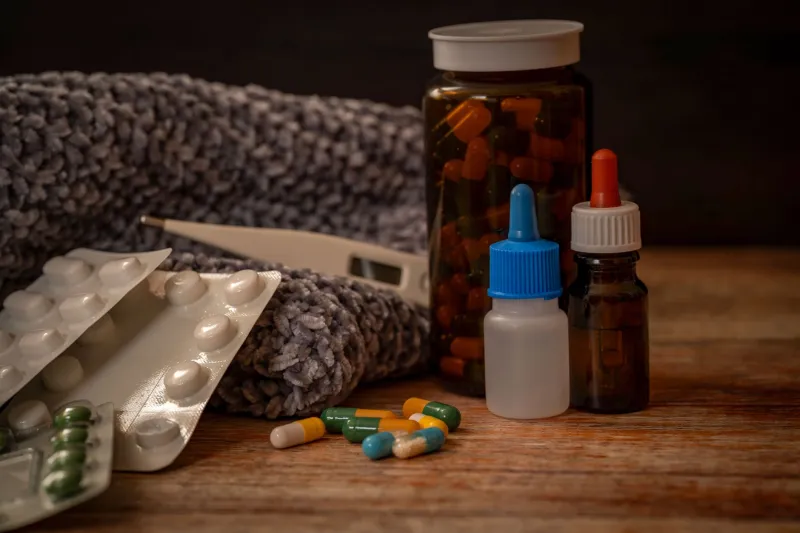
Over-the-counter cold and flu products are often blends. A single sachet or syrup may contain paracetamol, a decongestant, a cough suppressant, an antihistamine and caffeine. If you add a separate paracetamol tablet without checking, you can accidentally exceed the labelled daily maximum. This is a well-known risk in UK households, and it has nothing to do with CBD.
CBD adds a further layer because it can affect how some medicines are processed in the body. CBD is known to influence certain liver enzymes, including CYP3A4 and CYP2C19, and interaction data for common over-the-counter remedies are limited. That does not mean a serious interaction is likely with every cold remedy, but it does mean certainty is not available. Sedating antihistamines and CBD may both cause drowsiness. Decongestants can raise blood pressure or heart rate in some people. Cough medicines containing codeine or dextromethorphan deserve particular care. The practical response is not panic; it is caution, label reading and a conversation with a pharmacist when anything is unclear.
Read the label in two passes
First, read the active ingredients of every medicine you plan to take. Look for duplicate paracetamol, hidden caffeine, decongestants such as pseudoephedrine or phenylephrine, sedating antihistamines, and cough suppressants. Check the maximum daily dose and the minimum interval between doses. If you are already taking a multi-ingredient cold remedy, do not add a single-ingredient product without checking the total.
Second, read the CBD label with the same care. Note the amount of CBD per millilitre, per drop or per capsule. Check whether the product is a food supplement, whether it carries a Novel Food reference, and whether it makes any medical claims. In the UK, CBD products are not licensed medicines, and claims that they treat colds or flu should be treated with scepticism. Keep the packaging or take a photograph of the batch number and ingredients.
Timing and record-keeping
There is no proven rule for spacing CBD and cold medicines. Some pharmacists suggest leaving a gap of around two hours between CBD oil and other oral medicines as a precaution, but this is not a guaranteed interaction-management strategy. It may reduce peak overlap for some products, yet it does not remove the need to check ingredients.
A simple dosing diary can help. Record the time, product, dose and any symptoms or side effects. If you start a new cold remedy, note it in the same place. This is especially useful if you speak to a pharmacist or NHS 111 later. Avoid alcohol while unwell, and do not increase your CBD dose simply because a cold has made you feel worse. If you are using CBD for sleep, be wary of combining it with night-time cold remedies that also cause drowsiness.
When to ask a pharmacist
Ask a pharmacist before combining CBD with cold and flu medicines if you take any prescribed medicine, particularly blood thinners, epilepsy medicines, antidepressants, blood pressure medicines or medicines for heart conditions. The same applies if you have liver or kidney disease, are pregnant or breastfeeding, are older, or are considering CBD for a child. Bring the actual products or clear photographs of their labels. A pharmacist can check active ingredients, flag duplicate paracetamol and advise on sedation or cardiovascular risks.
Seek urgent help if you have difficulty breathing, chest pain, a fever that will not settle, confusion, dehydration or symptoms that worsen quickly. NHS 111 can advise on next steps. CBD should never delay that decision.
A sensible winter routine
The most reliable approach is unglamorous: keep a list of everything you take, choose single-ingredient remedies where possible, check the total paracetamol, and do not start a new CBD product during an acute illness unless you have checked it with a pharmacist. Continue prescribed medicines as directed. Rest, fluids and time remain the mainstays of cold care.
CBD may have a place in some people's wellness routines, but it is not a winter medicine cabinet essential for colds. The useful skill this season is not finding a stronger dose. It is reading the label, watching the clock and knowing when to ask for a second opinion.